Tuesday, September 3, 2013

Monument 14


Monument 14
by Emmy Laybourne
New York: Feiwel and Friends
2013
296 pages


Monument 14, on the YALSA Teens' Top Ten Nomination List, is a disaster book. The disaster happens in the first chapter, and two busloads of children, ages kindergarten through high school, find themselves in dire straits. This future society which offers many technological advances, including a nationwide computer network that keeps everyone informed and connected, does not hold up very long in the face of major natural disasters. Add some unnatural disasters, too, and we looking at the "end of the world as we know it."

We hear this story through Dean Grieder, a high school junior. He began his day as usual, catching the school bus, but little did he know, this day would be not be ordinary. Soon after the bus started its route to school, a hail storm unlike any other caused the bus to skid out of control and eventually turn over. Dean's younger brother was on his own bus ahead of Dean's, but that bus driver was fortunate enough to keep her bus upright, ramming it into a large superstore, Greenway. Dean's bus rolled over and kids were injured or not moving, and the bus driver was pinned under the steering wheel and appeared to be bleeding profusely. We see the that the bus is on fire, the bus driver is dying, and giant hail is pounding the bus--how will the kids get off the bus to safety?

This book takes place over the course of two weeks and the children's lives are changed dramatically. Mrs. Wooly, the brave bus driver and only adult on the premises, decided to leave to seek help at the nearby hospital and to find out what is happening. She instructed the children to remain in the store and stay together. This is the last they see her. Jake, a high school senior, is left in charge of the kids at the store, and most of the high schoolers are conscious of the needs of the small children, who are pedictably freaking out. There is a mini restaurant in the store and they are able to cook pizzas for everyone who is able to eat. Then another disaster hits--earthquake!
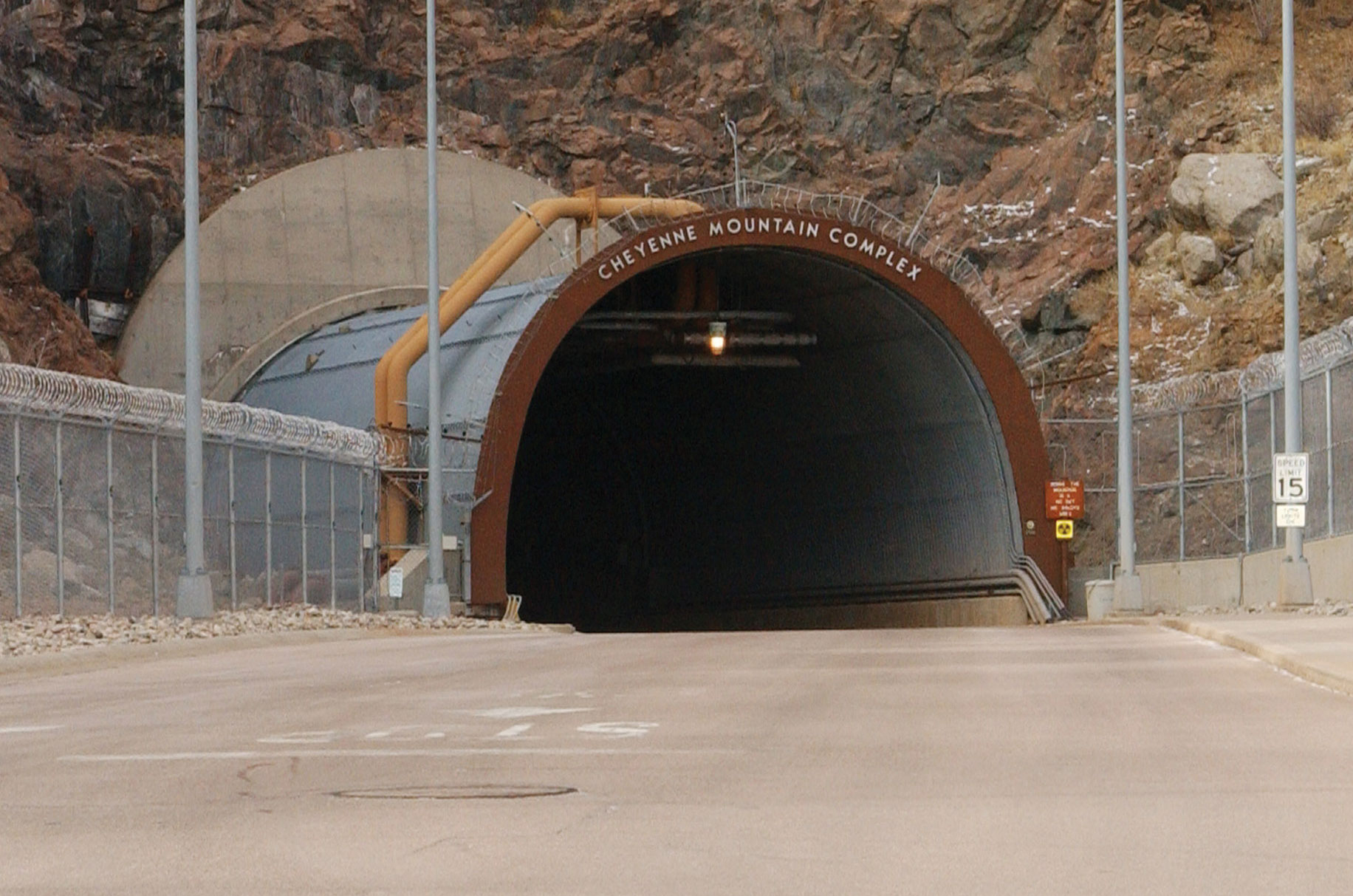
The entrance to the
 Cheyenne Mountain Complex, NORAD
One of the unnatural factors that contributes to this disaster is the chemical cloud that appears on the horizon. The North American Aerospace Defense Command (NORAD) is located near Monument and apparently they have been experimenting with dangerous chemicals. These have an immediate effect on everyone.  The news report the kids are able to get on the old television in the media section of the store reveals that the chemicals in the air affect people according to blood type:

  • Type A: severe blisters on all exposed skin. With prolonged exposure, internal organs will hemorrhage.
  • Type AB: paranoid delusions and hallucinations.
  • Type B: long-term reproductive problems, but no immediate problems.
  • Type O: dangerous, deranged, and violent behavior.

The kids realize that they need to seal up the store as well as they can, so they put up coverings over any exposed vents and doorways. Luckily the heavy metal security gates have been activated, which keeps the violent people out, but also they keep the kids from leaving.

Overall, this was an exciting story with plenty of action. I admired several of the characters and their reactions to the situation, including Dean, who takes on the cooking despite not really wanting to be tied to the kitchen; Alex, his brother, who is smart and innovative; Niko, the Boy Scout who shows his capability to deal with problems despite the dislike shown him by two of the high school boys; and Josie who, once she recovers from her shock, proves to be a welcome calming influence over the little kids.

Other characters behave in ways that I suspect would be typical of kids suddenly with no adult supervision. Brayden and Jake quickly discover the alcohol and pharmacy, choosing to get high rather than provide stable support for the smaller children. Sahalia, an 8th grade girl, becomes pouty that she isn't treated like a "big" kid, but then she doesn't contribute anything to show that she can act maturely. Her way of showing maturity is to flirt with the older boys in inappropriate ways and becoming a huge problem for the others.

One thing I did wonder about, though, was why there were no people in the superstore, Greenway. The kids were going to school before 8:00am, but the store was not open and there were no employees inside preparing for the day. If this store is similar to Walmart or Target, it would be open 24 hours, but this store is obviously not open until later in the morning. Extra people would have distracted us from the action of the story, but I doubt the realism here.

I recommend this book to all who enjoy a good end-of-the-world disaster story, but I would advise that it is more for teens 15 and older due to sexual content. Book Two Monument 14: Sky on Fire is out and I am excited to read it to find out what happens next.

Friday, August 30, 2013

Wasteland


Wasteland
by Susan Kim and Laurence Klavan
New York: HarperTeen
2013
328 pages


Wasteland is the first book of a trilogy, with two more books to come out. This is a post-apocalyptic disaster story for teens, another type of horror that attracts and repels me. The horror of living in a world that is so unlike what we know is possibly more real and scary to people than the typical horror story with ghosts and ghouls. We hear stories about horrific wars and violence in the news every day, and The End of Everything We Know is something that many people worry about. I do sometimes. We all want to know if we would be able to survive a disaster.

This story is told from the viewpoint of Esther, a 15-year-old girl who lives in the rubble of a city called Prin. In her world there are only young people, since 19 seems to be the average lifespan before kids get the disease that kills them. They do not know what it is, and there are no doctors, so there is no cure. Once someone comes down with the first symptoms, they are "shunned" and sent out into the desert wasteland alone to die. Children must grow up very quickly in this society, and partnering (the term in the book) is usually done before Esther's age of 15.

The town is governed (or rather, terrorized) by a young man named Levi who has holed himself up in a large warehouse called "The Source" on the outskirts of the main town. Levi is making Prin as much of a wasteland as any natural disaster had. He selfishly controls and guards all of the food, water, and supplies that were found in the warehouse, and Levi is the one who trades these items for work performed, or there are punishments incurred. The citizens must work beginning at age 5 and there are three main job assignments:
  1. Excavation: teams are told to dig holes around the area. They do not know why or for what purpose.
  2. Gleaning: exploring the area for anything useful, including medical supplies, bedding, fuel, etc. and taking it to the Source to be tallied up and traded for more food and water in the town's allotment.
  3. Harvesting: exploring the area to recover gasoline, the most valuable resource in Prin, from vehicles to trade to Levi for more food and water.
Needless to say, there are many dangers in this world, besides the lack of food and water. There is the intense heat of the day that continues into night. There are mutants called "variants" who are humans who have changed so much in appearance and gender identity that they really don't seem human any longer. The variants are hostile to the citizens of Prin, although the reason for that doesn't become apparent until later in the story..  But probably the biggest threat is Levi, who is not a great benefactor but a devious and possibly insane opportunist.

Esther is a rather rebellious girl who does not like to participate in the mandatory job assignments. She is constantly being reprimanded by her older sister, Sarah, but to no avail. Esther has a variant friend, as well as a friend named Jacob who lives outside of the town with his cats. She also meets Caleb, a newcomer to town who is looking for his lost son who was stolen from him. She is a free thinker who does not want things to remain the way they are and have been for a long time.

This is basically a story about good versus evil and how people, if they work together, can defeat evil to help each other. It is a story of survival. We are not told what has happened to the world, which is perhaps one of the flaws of the story, but we assume it is a nuclear war and that the sickness and mutations must be caused by radiation poisoning. I do not have the feeling that the disaster was recent, either, so the present generation of the story have evolved and changed and adapted somewhat. But I also suspect it couldn't have happened too long ago, since there are still valuables to find in the surrounding area. We also don't learn about any other communities of "normal" people. Is the entire country like this, a barren wasteland run by children?

There have been other stories about kids surviving on their own and what we imagine it would be like. Lord of the Flies comes immediately to mind, and there is no happy ending to that tale. Wasteland, however, does have a happy ending: Esther resolves her issues and gains acceptance by her community, Levi is destroyed, and the town finds something they need desperately to survive which gives them hope for the future.

Although I have read better dystopian books, this one has some interesting plot lines. It has a strong female character, a romance, and satisfying resolution to a main problem. Teens who are interested in dystopian fiction will probably want to try this series, but due to the more graphic sexual discussions in the book, I would recommend to older teens, perhaps 15 and older.

Wait for What Will Come


Wait for What Will Come
by Barbara Michaels
first published in 1978
about 280 pages, depending on edition

As I mentioned in an earlier blog entry, one of my favorite authors, Barbara Michaels aka Elizabeth Peters, died this month. The books she wrote under her pseudonym Barbara Michaels are gothic thrillers, usually with a supernatural connection. I want to read many of these over again, some I haven't read since high school. The first I read was Wait for What Will Come because I had it on my nook already.

Carla Tregellas is the last of an old Cornish family. She is tracked down by a lawyer and learns that she has inherited the old family mansion in Cornwall. There is no money with the legacy to take care of the place, and it's in bad shape, but Carla decides to go and spend her summer vacation there learning about her heritage before it has to be sold. It will be an exciting opportunity that this math teacher may never have again!

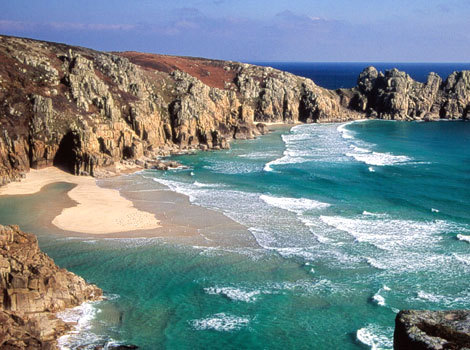
I imagine the Tregellas mansion on a Cornish cliffside similar to this.

Upon her arrival, the elderly housekeeper shrieks and practically faints. "It is Lady Caroline back from the dead!" Who is Lady Caroline, you might ask? We learn that Lady Caroline Tregellas disappeared 200 years ago and was said to have been kidnapped by a selkie on Midsummer's Night and taken to his watery kingdom, never seen or heard from again. And now it is going to happen again and Carla will be taken away by the selkie, or at least that is what Mrs. Pendennis the housekeeper believes!

I think some of you might not know about the selkies. Mythological creatures found in Faroese, Icelandic, Irish and Scottish folklore, selchies (silkies, selchies) live as seals in the sea but shed their skins on land to become human. In the stories, male selkies kidnap human women to be their wives and take them to sea. This is the legend explored in this book. For more on the selkies, this Wikipedia article will be helpful.

Carla has a lot to put up with in this story. We have Mrs. Pendennis, the elderly housekeeper who can hardly bear to look at Carla because of the curse and Lady Caroline. Then we have Mike, Mrs. Pendennis' grandson who is living in the house and taking care of the garden. Carla thinks he is surly, but she is also attracted to him. Mike used to be a fairly well-known dancer, so why he is here mucking about? He tells Carla that he would like to buy the house with his mysterious friend, Tim, but he hopes she will take payments.

Other love interests are Allan, the suave lawyer who has been entrusted to advise Carla on estate matters. Also Simon, a folklore-loving local doctor who is only too happy to tell Carla all about the selkie story. Then we also have John, the local vicar, who is keen on solving the mystery of Lady Caroline in time to save Carla from a similar fate.

This book has all of the elements of a good gothic thriller: the spooky house of doom, the archetypal hero (although at first we don't quite know which of the four young men is the hero), and the portent of evil. Despite the rather corny possibilities this could lead to, Carla is a very level-headed young lady who is not easily frightened. Although I somewhat doubt that any young woman could receive so many marriage proposals within such a short time, having only met all three men within a couple of months of their declarations, it works in the story, especially when you find out which one(s) are not sincere.

The ending of this story, which I am not going to give away, leaves us wondering if there might not be some truth to the selkie story after all. I heartily approve of Barbara Michaels' leaving us with this possibility. Some things are just better left unexplained.