Showing posts with label friendship. Show all posts

Sunday, October 20, 2013

Shadows


Shadows
Book Two in the Ashes Trilogy
by Ilsa J. Bick
Grand Haven, MI: Brilliance Audio
2012
Read by Katherine Kellgren
11 sound discs, 13.25 hours


Well, I finally made it through Book Two of this series. It was difficult, but I had to find out what happened to our main characters, who are:

  • Alex, the girl whose parents died and was dying herself from a brain tumor--until the electromagnetic pulse wiped out most of mankind and changed the survivors into zombies;
  • Tom, the soldier who survived Afghanistan only to find he might not survive the zombie apocalypse;
  • and Ellie, the young girl who was taken by adults but then left in the wilderness and now is in danger of being eaten.
Shadows answers some of our questions, but since this is a trilogy, you know it won't answer all of them.

The book begins with a look at Tom. Remember, Tom had been seriously injured and Alex had left him at a convenience store to find help in the small village of Rule, which was rumored to be safe. Alex made it to Rule, but when she finally convinced a rescue party to came back, Tom was gone. It turns out Tom was rescued by a kind couple, Jim and Grace, along with their dog, Raleigh. They took him to their cabin in Wisconsin where he was allowed to heal and rest, although in extreme seclusion from all prying eyes. Even this early, Jim and Grace know how dangerous it would be for them and Tom if the neighbors and bounty hunters found out that they were harboring a young man who had not Changed.

At the end of Book One, Alex planned her getaway from Rule so that she can look for Tom and gets help from Jess, an older woman who took her in when she first arrived. There is more to that situation, too, as you will find out. But Alex quickly discovers that her getaway has put her right into a trap and she is captured by a band of Changed, or "Chuckies" as they are sometimes called now.

What is a Chucky, you might ask? For those of you who haven't seen the movies, Chucky is a doll character from a series of horror films, the Child's Play series. The soul of a notorious serial killer inhabits a doll and then continuously tries to transfer into a human body. The doll acts like the serial killer, using the guise of the innocent looking doll to wreak havoc and viciously mutilate people.

Bad Chucky, Good Chucky

Our Changed teens have gone from being normal, thinking humans to vicious, inhuman monsters, kidnapping people and saving them for dinner. And now Alex is captured by them! And surprise, Rule has been assisting these Changed by "feeding" them the banished citizens in order to keep their settlement protected. We are left wondering what is really going on here? Who are the bad guys and how did this all develop so quickly? Can we trust no one any more?

Most of this story is about Alex's time with the group of Changed and her reactions to what terrible things she witnesses. She is quite helpless to get away, and all she can do is hope that she won't be selected next. I feel like bad luck follows Alex around and that every time she could get help or get away, we are trapped right back in the horror.

Meanwhile, Tom has healed, but he is nearly captured by a snoopy neighbor. He manages to get away with the dog, Raleigh, but then trusts the wrong person, too. He is then rescued again from nearly being recaptured by bounty hunters, but finds himself taken by a rebel group who want to blow up the old mine near Rule where the Changed are bringing victims. Tom is perfect for this job, since he worked with bombs and explosives in Afghanistan, so there is no chance for him to escape and continue his search for Alex. To make matters worse, the leader of the rebel group may be a double agent who lies to Tom about Alex being locked up in Rule, when really he knows she has been taken by the Changed.

At the end of Book Two, Tom finds Alex just as the bomb is about to go off and he cannot rescue her. Peter, one of the two young men from Rule, is imprisoned by a crazy militant who has given him the choice of eating human flesh or dying. Chris, the other young man, has been banished and has now fallen victim of a trap made by the Changed to capture more dinner.

Now all along I have wondered what happened to the little girl, Ellie. She had been mentioned during Alex's stay in Rule as she "smells" the bad guy who took Ellie. When confronted, the man confessed to leaving Ellie alone in the wilderness. He was then banished from Rule. But has Ellie died? We get a hint of her later in this story, as Chris, Alex's ally in Rule, lies buried in the snow as a result of the trap. A little voice is heard calling "Mina!" which is the name of Ellie's dog. Can she really have survived and if so, how? And how will Chris get out of the trap?

This story contains intense descriptions, using lots of metaphors and similes, of how the Changed zombies eat. Too much slurp, crunch, smack, munch, etc., along with vividly expressed comparisons of what the zombie feasting tastes, smells, sounds, and feels like for me. It becomes very hard to take after awhile. I get already that the Zombie Apocalypse would NOT be pleasant! I found myself wishing that the action would move faster, beyond the all-too-horrible descriptions.


I still want answers to my questions about how any of these can end at all well for Alex, Tom, and Ellie. There are too few normal people left from the zap that ended normal life, but we can only hope that once we get out of this small part of Michigan, we can find real help. And who are the real monsters here? I am beginning to think that the pulse changed everyone's brains in some way, even if they didn't turn into zombies. The older people may look normal and trustworthy, but they soon exhibit dangerous, ruthless behavior, too, that is probably scarier to me than that of the Changed.

I am not looking forward to more zombie feast descriptions, but I suppose I will try to read the third book, just to get some resolution if nothing else.

Sunday, October 6, 2013

The Waking Dark


The Waking Dark
by Robin Wasserman
New York: Alfred A. Knopf
2013
454 pages


This is a fairly new horror book for teens by author Robin Wasserman. I had not read any of her books and the premise of this one appealed to me, but in many ways it fell short of my expectations.

This book is full of action but it is really disjointed. It took me nearly 100 pages to figure out who were the main characters of the book. They are:

  • Daniel Ghent: son of the crazy Preacher, survivor of a drug store shooting, brother of 8-year-old Milo
  • Jule Prevette: niece of the local meth producer, seeking to get away from her life, survivor of a family stabbing incident
  • Ellie King: a very devout teen who yearns to help her town but becomes a martyr instead, witness of the crucifixion of the church handyman by the religious leader at her church
  • Jeremiah West: gay member of the football team, witness of an inexplicable hit and run accident of his friend, Nick
  • Cassandra Porter: typical teenage girl until she dropped the baby boy she was babysitting out of a second story window and yet has no memory of doing it

The main catalyst for this story is a tornado which wipes out part of Oleander, Kansas. The disaster leaves the town shocked and people come together to clean up, but then the citizens begin to notice something strange. Although their cell phone and internet service is down, they had imagined that government volunteers and television crews would be descending on their town and helping everyone get back to normal. What happens instead is that their town is surrounded by supposed military personnel who enclose the entire town and tell everyone they are not allowed to leave "for their safety".

Tornado over Greensburg, Kansas in 1915

This is when things go drastically wrong. People begin to act in ways that are either uncharacteristic or more extreme, and never in a good way. They begin to commit crimes against each other, raiding stores, assaulting  and murdering people, looking for scapegoats such as Cassandra, who has escaped her nearby mental institution during the storm and has come back to hide near her home. Before too long, the people of the town have descended into the "dark" that has awakened in their minds and anarchy reigns. 

We don't learn what has caused the change until Cassandra and the doctor from her facility, who was captured, too, and thrown in the town's prison, escape with help from our other teenagers. The doctor is forced to tell the kids what she knows. They learn that they alone were given immunity to a drug called R8-G through their flu shots which, combined with a local natural condition that was aggravated by the tornado, is the perfect chemical weapon. The nearby facility was not a mental hospital/prison, as folks believed, but a chemical company's home base where they could experiment on the local population. Cassandra was injected with the drug, which led to hallucinations and caused her to black out when she committed her murder of the baby. R8-G causes people to commit atrocities to each other, quickly developing to a mass extermination of a population, I guess just to see what would happen. The company is keeping the town hostage while the drug continues to take effect, knowing that the end means that no one will survive.

I admire the teens who gradually find each other and band together to get out. They not only want to help themselves but they want to help the town. It is a small town and most people know each other. It is unfortunate that not all of our main characters could be saved, and the remainder feel and express real regret about that.

What I most disliked about the story was its lack of structure, its rambling prose that has trouble getting to the point. As I said before, Wasserman really took her time getting to the main action of the story and identifying the main characters and plot lines. We don't even learn about the fake government agency angle and the mind-altering drug explanation until Chapter 12, page 314. The insertion of "Oh, by the way" facts about the characters throughout the story was rather distracting and didn't help the story progress, or at best, just confused it. I don't necessarily object that we follow the story lines of several characters, but I think spending more time with them one at a time would have worked better. Also, focusing in on the main action instead of taking tangents all over the place would make a much tighter story. I think a good 100 pages could have been cut from the entire book by tightening up the story and removing tedious, superfluous details.

I would say this story is geared towards middle teens. It is a self-contained story, with no sequel-to-come feeling. While I didn't feel it was a complete waste of time reading it, I wouldn't put it on my best teen horror book list.

Tuesday, September 24, 2013

Ashes


Ashes
by Ilsa J. Bick
Grand Haven, MI: Brilliance Audio
2011
Performed by Katherine Kellgren
10 sound discs (11.3 hours)

At first I didn't know if I was going to be able to listen to this audio book or if I would have to read it myself. The narrator, Katherine Kellgren, has a very dramatic narration style that was distracting at first, with lots of loud shouting (there is a lot of shouting in this story), to lend some verisimilitude to the story's dialogue. After awhile, however, I got used to her style and became engrossed in the story.

Alex has gone on a pilgrimage to the fictional Waucamaw Wilderness of the Michigan Upper Peninsula to scatter her parents' ashes from Mirror Point on Lake Superior. Besides losing her parents too soon, Alex has her own "monster" to deal with, a brain tumor in her head for which there is nothing that can be done. By visiting the wilderness that meant so much to her family, Alex hopes to find some closure and make some plans to what future she has left. It's scary for her to be alone in the wilderness, but Alex's father taught her well and she feels capable of surviving for the few weeks she will be there.

Wilderness in the Upper Peninsula of Michigan
That is, until the strange electromagnetic pulse swept the sky. Alex, who has been visiting with a grandfather and granddaughter in their campsite, is knocked to the ground and begins to bleed from her nose. Jack, the grandfather, dies immediately, probably because of his pacemaker. Ellie, the 8-year-old granddaughter, also has survived.  Being in the wilderness, Alex doesn't know the immensity of the disaster at first, but she and Ellie find out that none of their electronics work. Without Jack, Ellie is left alone, and Alex feels she should protect the little girl as best she can, but Ellie is scared and does not want to go with a stranger. Eventually they begin the hike down the mountain to the ranger station, but along the way, they encounter some of the "Changed," teens who have changed into cannibalistic violent zombie creatures and attack any living thing they can find. Some adults have survived, but only older, 65+ year olds. Besides being in the wilderness away from help, Alex and Ellie don't know how they will get home.

Eventually, Alex and Ellie meet Tom, a soldier from Afghanistan who has not changed either. The three of them, with Ellie's dog, Mina, find the ranger station and are fortunate to find food, water, and good shelter. But they can't stay there forever. They must find out what has happened and how to get help for themselves.

Most of the story is full of danger and separation. All three get separated from each other, and unfortunately, you won't find out any answers about what happens to Tom and Ellie by the end of this book. Alex is the main focus of Ashes, and we see her struggle to keep the group together, how they are parted through violence, and how Alex finds refuge in the strange town of Rule, an isolated place run by a religious "cult" who are trying to find as many unchanged, or "spared", teens as they can. Once you are allowed in to Rule, it is very difficult to leave unless the Reverend, the leader of the council, decides that you are no longer useful and then you are banished completely.

Alex also finds that along with the brain zap, she now has a super sense of smell and can smell what people are feeling and thinking. She can smell the Changed before she sees them. Another unexplained effect is the reaction of the dogs to Alex. They absolutely adore and trust her, and I think we will see Alex learn to use this to her advantage eventually.

1987 movie starring Michael Rubin,Steven McCoy, and George Seminara
With these sorts of zombie stories, I am often struck by the unexplained fact that these kids, the Changed, are able to eat other people without getting sick and dying from it. You would think that the effect of raw human blood and flesh on a digestive system unused to it would be rather disastrous, if not fatal. The author doesn't explain (yet) how the brains of these teens have been changed, we just see the results, but does it also change their other body systems? I have this problem with other zombie stories, too, so I'm not blaming Ms. Bick for failing to explain it sufficiently.

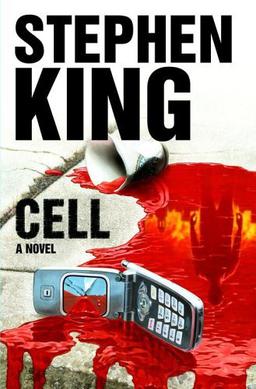
This story also reminds me of a Stephen King book, Cell, which I will review at a later time. In Cell, there is also a zap which comes through the cell phones. It turns people into mindless killing machines, too, who attack and eat each other. There is eventually more structure to those Changed, as they begin to group together and are held together through telepathy.

I recommend this story, which is Book 1 in a trilogy, to older teens, 15 and up. There is a lot of gore. The story is interesting and I am connected strongly to Alex, Tom, and Ellie, but I would rather not hear quite so many details about how the Changed rip apart their victims. And since I am left with Alex in the midst of five hungry Changed, I will have to listen to the next installment in Shadows (Book 2 in the Ashes Trilogy). I just hope I can stand all of the bloodshed!

Sunday, September 15, 2013

The Picture of Dorian Gray

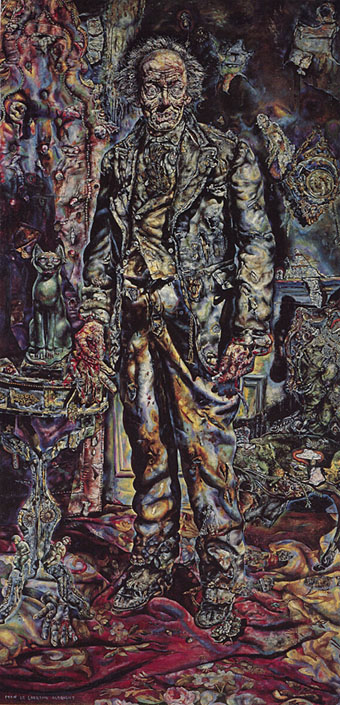
The Picture of Dorian Gray, Ivan Albright, 1945
The Art Institute of Chicago
This past week I went to one of my favorite places, the Art Institute in Chicago, and saw this painting by Ivan Albright, The Picture of Dorian Gray (1945). It was painted for the movie based on Oscar Wilde's only novel with the same title, directed by Albert Lewin and starring George Sanders, Hurd Hatfield, Donna Reed, and Angela Lansbury. On its own, this painting portrays an unreal and disturbing monster of a person, his clothes are slashed, stained, and decayed. The colors of the painting are strangely muted, not as bright as one might think blood and gore should be, but they are also more organic looking as a result. And this is a painting that developed organically.

In the movie, filmed in black and white, there are a few moments of color. The first comes when we get to see the painting of Dorian that his friend, Basil Hallward, had just completed. It shows a young gentleman who is self-assured, talented, wealthy, upper-class, and flawless.

Portrait of Dorian Gray, painted by Henrique Medina
 for the movie The Picture of Dorian Gray (1945)
In the story, Dorian Gray meets and befriends another friend of Basil's, Lord Henry Wotton, whose world view is based on hedonism and the fulfillment of the senses. All experiences are worth having, good and bad, without considering  the consequences to others. I am not quite sure how this works into his other opinion that seeking Youth and Beauty are of the highest value in life, since I do not associate bad or evil experiences as a way  to finding Youth or Beauty. Dorian likes his portrait and wishes that he could always be young and beautiful while his portrait would change. Lucky for him (or unfortunate for him, as the case may be), there just happens to be a little statue of Bastet, the Egyptian cat-goddess nearby. She appears in the portrait to Dorian's right. Perhaps we are meant to think that Bastet is sympathetic to the search for Youth and Beauty and wishes to give Dorian what he wants, or perhaps she might feel that he is foolish to wish for something like this and wants to teach him a lesson.

Dorian's infatuation with Sibyl Vane is a good example of his incorporating Lord Henry's philosophy into his own life. His infatuation with Sibyl and then his rejection of her at the advice of Lord Henry, in the guise of a test, shows that Dorian doesn't comprehend, although he might still care at this point, what he represented to Sibyl. She is desperate for a way to leave her life of singing in the little club, and her mother seems to constantly tell her that she deserves better. When "better" finds her and Dorian offers her a way out, she snatches it eagerly despite the inequality of their situations. But Sibyl is not willing to go against her moral standards to be with Basil and certainly does not expect to be rejected so utterly.

The next shocking flash of color comes when we again see the portrait. Absorbing all of the vices of the model, the painting has become gross, decayed, and terrifying. We haven't seen Dorian commit many crimes during the story and movie; we only know that 18 years have passed since Sibyl's death. We can only imagine the atrocities he has committed over the years. Of course, the horror of his murdering his friend Basil on top of the seduction of young innocent Gladys Hallward, who naively things that just because Dorian is so good looking, the things people say about him can't be true, are only a small sample of Dorian's vices. But the ending of the story proves that there can be redemption after all but at what price? This painting has come to represent his soul, what he has become deep inside and hides from the world. Can anyone this ugly and horrifying inside be capable of caring for anyone but himself? Will Gladys end up like poor Sibyl?

I thought Hurd Hatfield was a good choice for Dorian. I was particularly struck by how mask-like his face is throughout the movie, so smooth and wrinkle-free. But to have a face like this, it would imply that this person also doesn't show any emotion. Smiles cause wrinkles, too, and Hurd as Dorian doesn't ever seem to smile or laugh. Does he enjoy his life? Perhaps he is not capable of it.

If you haven't seen this movie, I recommend it but not as a substitute for the novel by Oscar Wilde. That is a classic of literary horror and shouldn't be missed.

The Albright painting was painted with the Medina portrait as the base. I wish the Art Institute had both of them side by side to show the contrast. Without the other, Albright's painting is a ghoulish painting that exemplifies a life spent in evil pursuits, or maybe it is just another zombie picture. Nasty but interesting. We don't understand the message of the book without the "original" to compare to it.

Thursday, September 5, 2013

The Graveyard Book


The Graveyard Book
by Neil Gaiman
New York: Harper Children's Audio
2008
7 sound discs (ca. 7.5 hours)


First of all, let me tell you that I think I have given up reading Neil Gaiman books myself. If I can find a sound recording with Neil Gaiman reading his own story, I will choose that EVERY time! What a great reader! I always love a good audiobook for my long car rides back and forth to work, but when the author himself (or herself) performs it so well, that is better than anything! We could go into how pleasing the deeper male voice (with British accent) is to female ears, but that doesn't matter here. Others I know who are male also think Neil Gaiman is just a great teller of his own stories. It is definitely worth hearing them in his own voice, if you want to try one of his books.

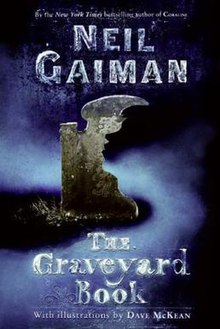
Spookily titled The Graveyard Book, this is not the scariest book you will ever read. It is, after all, for ages 10 and up and has received the Newbery Award for good reason. It is well-written, interesting, sometimes funny, with interesting characters, both alive and dead, and just plain entertaining. I like it for all of those reasons. It also has some horror elements which I want to discuss here in this blog, since we are talking about scary books. This author is very adept at adding the scary factor to children's books without getting too heavy handed, yet as an older reader (or listener), I can appreciate that there is more to make us afraid than the children might know.

This story, which Gaiman admits is loosely based on The Jungle Book, is about a small boy. One evening a stranger enters his home and killed--yes, in a children's book--the mother, father, and older sister of this small boy. The boy, who is only about two or three at the time, somehow manages to climb out of his crib, go down the long flight of stairs, out the open door, up the street, and into the old graveyard at the top of the hill. This small boy is then taken in and protected by the inhabitants of the graveyard, especially Mister and Mistress Owens who become his parents, and also a gentleman named Silas, about whom we learn more later. The toddler is named "Nobody Owens," and has the run of the graveyard  and he is safe from the man who is still looking for him.

Highgate Cemetery, London (wikimedia commons)

Most of the story is a bildungsroman about the boy Nobody, or Bod for short, and his growing up as the only living boy in the graveyard. His life isn't unhappy, just different. He has friends, tutors, and skills that most living people never learn such as fading, haunting, passing through solid objects, etc. Silas, his guardian and only person who can leave the graveyard, finds food and clothing in the outside world for him. We watch him grow and learn and change as time passes.

One day, Nobody finds a living friend, a little girl named Scarlett who visits the graveyard. Her parents think she is playing with an imaginary friend, and Scarlet isn't sure herself if Nobody is real. Scarlett eventually moves away and Bod is left without another living friend for a time. Scarlett is Bod's only live friend throughout this story, but even she cannot really understand him and his situation.

Behind all that happens is the knowledge that we haven't seen the last of Jack, the man who assassinated Bod's family. We don't know why he did it either, but since Silas and the ghosts are so adamant that Bod never leave the graveyard because this man is still after him, we are on edge, too. There is a close call concerning Jack, when 8-year-old Bod sneaks out of the graveyard to go into the town to sell an ancient brooch recovered from a barrow for a headstone for his witch friend, Lizzie Hempstock, buried outside of the graveyard in unconsecrated ground. The shopkeeper locks up the strange boy in his storeroom, and remembers someone who was looking for a boy like that, a man named Jack. Luckily for Bod and us, Lizzie came to the rescue and Bod gets away.

The true horror of the book takes place near the end of the story. Scarlett returns to the town and discovers that her friend, Nobody, isn't imaginary after all. She encounters him again while assisting another new friend, a Mr. Frost, with some grave rubbings. The two friends are glad to see each other, and Bod is happy to tell somebody his story. Scarlett takes it upon herself to find out more about the murder of his family and asks her friend Mr. Frost for help. Well, it just so happens that Mr. Frost is actually living in the house where this took place! Coincidence, you might ask? Probably not!

The Egyptian Avenue at Highgate Cemetery, London
taken by John Armagh, 12 August 2007 (wikimedia commons)

I don't want to give away all of the story because I really hope you will read this book. Let me just say that Bod is very fortunate to have the friends he does who have taught him the unusual skills he uses to defeat the bad guys in the end. We also learn about other strange and scary creatures in this book, including ghouls, sleers, Hounds of God (otherwise known as werewolves), and vampires. The ghosts are actually the least scary creatures in the story, since the living people Nobody encounters are, for the most part, rather terrifying.

I know the ending is meant to be happy when Bod is finally able to leave the cemetery (you have to read how that comes about), but he is only 15. He hasn't been to a modern school for more than a month or two, and lacks any live family or connections. He hasn't spent any significant time with living people and lacks social skills from modern times, since most of those skills were formed by the long-dead graveyard inhabitants. Silas has given him money, but will he know how to get on? As a mother myself, I'm as worried about him as Mistress Owens now. But Nobody Owens has proven himself to be resourceful, so we can only hope that he will be okay.

Another wonderful part about listening to this story rather than just reading it are the musical interludes on each cd. Béla Fleck, "banjo renegade," has contributed a marvelous rendition of Camille Saint-Saëns' Danse Macabre, with Ben Sollee on cello. The banjo is actually a very nice choice for this, duplicating some of the traditional violin sounds, but it also capable of sounding like the "bones," usually played by a xylophone or marimba. Below is a link to part of this recording, which is available on itunes. If you would like to hear the original orchestral Danse Macabre, try this recording. Any afficionado of horror should be familiar with this musical story of Death playing for skeletons in a graveyard until cock crow. It's a magnificent piece of music that is perfect for this story, made even more perfect with Fleck's unusual instrumentation.