Showing posts with label dystopian. Show all posts

Sunday, November 9, 2014

The 5th Wave


The 5th Wave
by Rick Yancey
Holland, OH: Dreamscape Media
2013
Performed by Phoebe Strole and Brandon Espinoza
10 sound discs (12 hours 42 minutes)


Recently, teens were allowed to vote for their favorite Top Ten Books in YALSA's (Young Adult Library Services Association) book challenge. The 5th Wave was on the list of  25 titles popular among teens right now, but it was not chosen. Personally, I am rather disappointed about this because I really like this book! It definitely is one of my Top Ten on that list!

In a sea of dystopian fiction for teenagers right now, this book stands out as being different.Instead of the world falling apart due to human actions through war, stupidity, or disease, this story revolves around the end of life as we know it due to an unusual alien invasion.

Let me explain the Waves:
  1. The First Wave was a massive EMP strike (revisit electromagnet pulses in Ilsa Bick's trilogy) that shorted out all forms of technology and electrical devices. Think about when the power goes out at your house. What can you do? Not a lot, unless you have some things that run on batteries or gas. And if you are lucky, you can always go stay with a friend or at a hotel. But what if everyone's power was out all over the world? Not only would your lights not work in an EMP strike, but your cell phone, your car battery, etc. would not function.
  2. The Second Wave was a tsunami wave, created by the Others when they dropped some form of metal rod from the upper atmosphere onto one of the earth's fault lines. Coastal cities on all seven continents were wiped out, including huge cities such as New York and Los Angeles.
  3. The Third Wave was a formidable plague that wiped out ninety-seven percent of the remaining human population. Also called the "blood plague," the Others engineered a virus so quickly fatal that humans didn't have a chance to even find a cure. Not all people who contracted the plague died. Ben was the sole survivor in his family, but nobody knows why some people were spared.
  4. The Fourth Wave was a group of silencers, people previously embedded with alien consciousnesses and awakened to their alien self, who travel the countryside, shooting any humans they discover.
Our story begins in the middle of the Fourth Wave, when humans are huddling together in small communities, waiting and wondering what is next for them. There is a giant spaceship in the sky which no one has managed to contact or, as is more likely, the aliens are purposely ignoring the contact. People had thought the aliens would be interested in meeting them, with visions of an E.T. visit, but it has turned out to be more like the War of the Worlds, without the happy-ish ending.

Scene from the 1953 version of The War of the Worlds

Cassie, her father and brother, Sam, are living in a camp of survivors. Things are okay, not great, but at least they are together. Cassie's mother and many of her friends and neighbors had died of the plague.

One day, they hear the sound of buses rumbling into the camp. It's the army to rescue! Or is it? The buses turn out to be older school buses and the army personnel who come with them start rounding up all of the children. They tell the adults that they are taking the smallest children to the closest military base for safety and then more buses will return for them. Most parents seem unhappy about this, but they want their children to be safe. When Cassie's and Sam's turn comes to board the bus, Cassie is not allowed on--only Sam is wanted. Cassie, being protective of her brother and adamant about the small family staying together, argues that either she goes or Sam stays. In the end, Sam goes without Cassie but gives her his teddy bear to keep her safe, with the hopes that she will return it soon.

After the buses leave, the rest are rounded up into the buildings. Cassie starts to get suspicious about what is happening, only to have her fears confirmed. She only manages to escape by hiding in the nearby ash pit, comprised of the ashes of the dead.

I don't to tell you how this story comes out because I want you to read it, but Cassie, in her quest to find and rescue her brother from murderers, discovers the true nature of the Fifth Wave. She learns that she isn't the only human on earth, which worried her for a while, and that not all of the "others" are cruel destroyers of all human life. She learns to trust again, although doing so leaves her very exposed physically, mentally, and emotionally.

I particularly like Cassie as a main female character. She reminds me somewhat of Alex in the Ilsa Bick trilogy in the way she, as an ordinary high school girl, finds the strength and smarts to survive in the wilderness. Neither girl really knows what is happening or why. I know plenty of young women who would probably feel lost and helpless without their cell phones and the internet to tell them what to do or what is going on. The drive and urgency to help another person or people to survive, too, also plays a part in both stories, and maybe that helps them carry on and not give up despite the odds.

There are also two very strong male characters: Ben (Zombie) and Evan Walker. Ben has the guts to stick up for younger kids in the military camp. He is the main reason that Cassie's little brother, Sam, is able to deal with what has happened to him. Evan Walker is a mystery and I can't wait to find out how his character develops and interacts with the other human characters.

I liked the audio version of this story. We have two readers, Brandon Espinoza and Phoebe Strole. It makes sense in this story since we switch back and forth between Cassie and Evan and Ben. Both readers are smooth and engaging. I look forward to hearing more from them in the second volume.

The movie version is being cast as we speak. It is due to come out in January 2016. I can't wait!



Sunday, June 15, 2014

Dorothy Must Die


Dorothy Must Die
by Danielle Paige
New York: Harper
2014
452 pages


For all of you Oz fans out there, how about a dypstopian story about Dorothy, the Wizard, and all of the strange inhabitants we have met in the Emerald City?

Amy Gumm lives in a trailer in Kansas with her mother, an alcoholic who doesn't pay much attention to what is going on in Amy's life. Then along comes a tornado. Amy is left to hold the fort, as her mother has left her and Star, the family's pet rat, to take care of themselves in the upcoming disaster. Amy has nowhere to hide and she is taken up in the storm, twirling around in the trailer.

Immediately upon landing with a thud, Amy finds herself at the top of a precipice. Handily, a beautiful and strange young man is there to help her out of the trailer before it falls crashing to the bottom of the cliff. The mysterious young man welcomes her to Oz, but this isn't the Oz of the stories Amy has heard. The countryside is devoid of crops and color. Where did the lovely Munchkin blue go?

The strange young man explains to Amy that Dorothy, once she became Princess of Oz, became addicted to magic and now mines it from the land and people of Oz. Her laws are strict, even fierce, and her helpers--the Tin Woodman, the Scarecrow, and the Cowardly Lion--frighten, imprison, and punish the Oz population if they do not happily cooperate. And the Oz citizens must be happy, or else the Scarecrow, a nightmarish mad scientist figure in this story, will give them an "Attitude Adjustment."

The witches of Oz are divided. Glinda, the Good Witch, is key in the mining operations and is instrumental in making Dorothy's whims a reality. The other witches, however, those that we have always thought of as "Wicked," are united in The Order of the Wicked and are excited to find a girl from the Other Place who is their only hope to defeat Dorothy in her conquest of Oz. In this Oz, the roles of Wicked and Good are reversed, although the witches are not entirely Good, either. They are longing for the old days, when they were free to terrorize the land. They trap Amy into helping with their cause, convincing her that she is the only one who can set Oz to rights again. And the only way to do that is to kill Dorothy and end her reign of terror.

There is a lot of action in this story, and Amy's fumbling to spy on Dorothy and her household, makes the story interesting. Amy is a smart, capable, and strong female character, but she would be the first to say that she doesn't know what she is doing. I can appreciate that in a book character. I also enjoyed meeting other personalities along the way, including Nox, another Order member who teaches Amy about magic; Star, the amazing rodent; Ollie, the wingless monkey who helps Amy along the way; Jellia, the head maid in the palace; and Pete, the mysterious young man who is not who Amy thought he was.

I even experienced a furtive enjoyment in meeting the Wizard, who can't be trusted to be on either side, and the crazy, evil Scarecrow, who eats the brains of smart, magical creatures so that he can be smarter.

Surprisingly, this book is only the beginning of the story. Dorothy gets away and Amy gains surprising allies. But what comes next? We will have to wait for the next installment from Danielle Paige. I know I can't wait for it!

Saturday, January 18, 2014

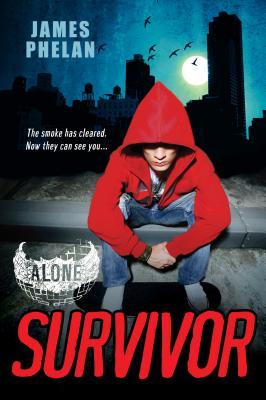
Survivor


Survivor
Book Two in the Alone Trilogy
by James Phelan
New York: Kensington Publishing Corp.
2011
242 pages


This second book in the Alone Trilogy by Australian author, James Phelan, continues the story of Jesse, an Australian teen who had come to New York City for the United Nations Youth Camp, only to be propelled into a large-scale city-wide, if not worldwide, disaster. He was alone in the GE Building at 30 Rockefeller Plaza at the end of the first installment of the story and had decided to try to find other survivors. In his search, he had stopped at the apartment nearby and discovered the video evidence of another possible survivor, a girl named Felicity. Jesse became determined to find her, but how? Jesse was worried that she had headed into Central Park, the best possibility for survivors but also a congregating site of many Chasers--the survivors who chase any other humans they see in order to catch them and drink their blood.

Early in the story, Jesse encounters a military truck full of soldiers. These men are not here to rescue survivors, however, but to quarantine the infected Chasers and survivors together. They offer no explanation to Jesse for what has happened or how he can get back home. Jesse begins to lose hope as the men move on, shooting Chasers and knocking down more buildings.

Afterwards, Jesse meets Rachel, an intern who is the lone survivor at the Central Park Zoo. She is trying to take care of the animals by herself with limited resources. Her living arrangements are inadequate and not nearly as safe as what Jesse had experienced at 30 Rockefeller Plaza. Fortunately for her, Jesse is not afraid to go out to try to get more food and supplies for her and the animals. But how to get Rachel to join him in his search for Felicity and other survivors? Her sense of responsibility for the animals is very strong.


Jesse also finds another young man named Caleb who has been living comfortably in a bookstore. Caleb entices Jesse in from his search for food and supplies with offers of generator-cooked food, company, and potential help with the heavy lifting back to the zoo. Caleb means well, but he keeps Jesse too long while Rachel is alone and worrying about him. It comes out okay, however, and Caleb does help with the supplies and eventually a generator for the animal care.

We eventually find Felicity, who is also happy to find other survivors. She understands Rachel's commitment to the animals better than Jesse, I think. But Jesse still feels the need to go out to find more survivors and help.

The disturbing part of this story is that the Chasers seem to be getting smarter about tracking victims. They follow people and then revisit their safe places later unexpectedly. The blood drinking Chasers seem to be getting stronger, with more endurance, becoming quite dangerous to Jesse and the others. To make matters worse, the mysterious military men set off another missile containing the mysterious virus, so anyone in its vicinity who wasn't exposed previously is now at risk.

Despite the craftiness of the Chasers and the lack of explanation for the disaster, I still have an interest in the story. I want Jesse to find a way out of this trouble, and now I especially want help for Rachel and the animals. Adding cute zoo animals to the story will do that to me. I appreciated the toned-down descriptions of the zombie/vampire-like infected humans, unlike those I read in the Ilse Bick trilogy, so I think this story can appeal to a much younger audience.

I recommend this book for ages 12 and up.

Wednesday, January 8, 2014

Chasers


Chasers
by James Phelan
New York: Kensington Publishing Corp.
2010
213 pages


Chasers is the first in the dystopian Alone trilogy by Australian author, James Phelan. His Australian protagonist, Jesse, is 16 years old and visiting New York City for the first time in order to attend a United Nations camp for Youth Ambassadors. He and his new acquaintances--Dave, Mini, and Anna--are travelling on the subway with other camp attendees to see the sights, when disaster strikes. Jesse sees a fireball coming down the tunnel and hears the explosion before the train derails and tips over. Darkness envelops the teens and when they find their flashlights, they discover many people are dead or just not there anymore.

When the four make it out of the subway tunnels, the scene before them is devastating. Hundreds of cars had crashed into each other, buildings are demolished, and there are craters instead of streets. Some people are milling around, but they are not behaving normally. Jesse watches as they drink from puddles, but then he notices a few people hunched over the dead bodies, drinking their blood. What has happened on their subway ride? The teens have to run fast to get away from these "chasers" who will track people and attack them.

The teens hide on the
70th floorof
the GE Building,
Rockefeller Plaza, NYC
Jesse and the others find refuge in one of the only skyscrapers remaining intact, the GE Building at 30 Rockefeller Plaza. Fortunately, they find plenty to eat in the Rainbow Room restaurant, and there is an observation deck near the top of the building. Being 70 floors above the destroyed city gives them a sense of safety and also a view of the devastation. Not much is left and the few people they see seem to be the strangely-behaved "chasers" who attack those who are only drinking water or the few "normal" people.

The rest of the story outlines the friends' exploration of the building, their discussions about what could have happened to cause the massive ruination of the large city, and their tentative excursions into the outside world looking for a way out.

I'm not going to give away the surprise at the end. I'll just say that I was not expecting what I learned, and certain things mentioned along the way then made sense. This book, however, clearly is only the beginning of the story. Why are the car batteries drained making the cars unusable? Why are buildings collapsed and collapsing, even two weeks after the initial event? And what happened to all of the people? Most of the people are just gone, and those that remain seem to have a strange sickness that forces them to drink all the time. Are there any other survivors, and how will these kids find them?
The Rainbow Room where Jesse, Dave,
Anna, and Mini go after the big disaster.

This was a well-written story for teens, ages 12 and up, and typical of the dystopian genre. I felt connected to the main character, Jesse, who is the main focus of the story. The other characters seem less developed, but that is to be expected if they are only supporting characters. The violence of the Chasers is not described in gory detail, but we still can feel the horror of the situation in which these teens now find themselves.

I am excited to get to the next book in the series.

Thursday, November 28, 2013

Monsters


Monsters
Book 3 in the Ashes Trilogy
by Ilsa J. Bick
New York: Egmont USA
2013
688 pages


I feel like I have climbed Mount Everest or gotten an A on a very difficult final exam. What have I really done? I have finally finished the monster-sized book in the Ashes Trilogy, Monsters.

This book is less about the zombie-like Changed eating habits and more about the other monsters of the story, the humans who attempt to control them and those that fight against them. Topping the list is Finn, an old veteran who seems to have a way with the "Chuckies" and has been performing experiments on them and conditioning them to do his bidding. He has captured Peter, one of the Spared from the town of Rule, and has managed to nearly brainwash him into acting like the Changed. I think Finn uses a form of mind control, rather like what Alex has with the monster in her head, the brain tumor.

Alex can can communicate with dogs and the Changed, leaping into their brains to see through their eyes. This has come in handy sometimes, and she has been Spared in many ways besides surviving the initial electromagnetic zap, but it is also rather disturbing and scary to her to let her tumor take control of her actions.

It was rather a relief to have the many story lines--the Rule people, the Finn camp, the Amish camp in Oren, Tom and the kids, and Alex with Wolf/Simon--all merge together better. It was rather difficult keeping up with all of the action of each group, and when they begin to interact, I felt like the story was less confusing and moved along faster. I was especially glad when the initial threesome--Tom, Alex, and Ellie--found out that they are all still alive, despite all of the terrible things that have happened to them.

The final confrontation with Finn and Alex, on which I won't elaborate, is somewhat unexpected and terrifying, maybe a little bit cheating because it involves an unexplained element. How can Alex do what she does? I guess Alex doesn't know herself.

Thinking about the series as a whole, I am rather disappointed that I still don't know anything about what caused the electromagnetic pulse or how it affected the outside world. We only encounter people in this small, very isolated portion of the country. Are people all over going through this, too? Who else has survived? Is it safe to venture farther away to find others? Our survivors haven't done that by the end of the book, making a home for themselves in a beautiful, isolated valley, but maybe they will once they recover.

And if you imagine that electromagnetic pulses are not possible, you can find out more here:

Sunday, October 20, 2013

Shadows


Shadows
Book Two in the Ashes Trilogy
by Ilsa J. Bick
Grand Haven, MI: Brilliance Audio
2012
Read by Katherine Kellgren
11 sound discs, 13.25 hours


Well, I finally made it through Book Two of this series. It was difficult, but I had to find out what happened to our main characters, who are:

  • Alex, the girl whose parents died and was dying herself from a brain tumor--until the electromagnetic pulse wiped out most of mankind and changed the survivors into zombies;
  • Tom, the soldier who survived Afghanistan only to find he might not survive the zombie apocalypse;
  • and Ellie, the young girl who was taken by adults but then left in the wilderness and now is in danger of being eaten.
Shadows answers some of our questions, but since this is a trilogy, you know it won't answer all of them.

The book begins with a look at Tom. Remember, Tom had been seriously injured and Alex had left him at a convenience store to find help in the small village of Rule, which was rumored to be safe. Alex made it to Rule, but when she finally convinced a rescue party to came back, Tom was gone. It turns out Tom was rescued by a kind couple, Jim and Grace, along with their dog, Raleigh. They took him to their cabin in Wisconsin where he was allowed to heal and rest, although in extreme seclusion from all prying eyes. Even this early, Jim and Grace know how dangerous it would be for them and Tom if the neighbors and bounty hunters found out that they were harboring a young man who had not Changed.

At the end of Book One, Alex planned her getaway from Rule so that she can look for Tom and gets help from Jess, an older woman who took her in when she first arrived. There is more to that situation, too, as you will find out. But Alex quickly discovers that her getaway has put her right into a trap and she is captured by a band of Changed, or "Chuckies" as they are sometimes called now.

What is a Chucky, you might ask? For those of you who haven't seen the movies, Chucky is a doll character from a series of horror films, the Child's Play series. The soul of a notorious serial killer inhabits a doll and then continuously tries to transfer into a human body. The doll acts like the serial killer, using the guise of the innocent looking doll to wreak havoc and viciously mutilate people.

Bad Chucky, Good Chucky

Our Changed teens have gone from being normal, thinking humans to vicious, inhuman monsters, kidnapping people and saving them for dinner. And now Alex is captured by them! And surprise, Rule has been assisting these Changed by "feeding" them the banished citizens in order to keep their settlement protected. We are left wondering what is really going on here? Who are the bad guys and how did this all develop so quickly? Can we trust no one any more?

Most of this story is about Alex's time with the group of Changed and her reactions to what terrible things she witnesses. She is quite helpless to get away, and all she can do is hope that she won't be selected next. I feel like bad luck follows Alex around and that every time she could get help or get away, we are trapped right back in the horror.

Meanwhile, Tom has healed, but he is nearly captured by a snoopy neighbor. He manages to get away with the dog, Raleigh, but then trusts the wrong person, too. He is then rescued again from nearly being recaptured by bounty hunters, but finds himself taken by a rebel group who want to blow up the old mine near Rule where the Changed are bringing victims. Tom is perfect for this job, since he worked with bombs and explosives in Afghanistan, so there is no chance for him to escape and continue his search for Alex. To make matters worse, the leader of the rebel group may be a double agent who lies to Tom about Alex being locked up in Rule, when really he knows she has been taken by the Changed.

At the end of Book Two, Tom finds Alex just as the bomb is about to go off and he cannot rescue her. Peter, one of the two young men from Rule, is imprisoned by a crazy militant who has given him the choice of eating human flesh or dying. Chris, the other young man, has been banished and has now fallen victim of a trap made by the Changed to capture more dinner.

Now all along I have wondered what happened to the little girl, Ellie. She had been mentioned during Alex's stay in Rule as she "smells" the bad guy who took Ellie. When confronted, the man confessed to leaving Ellie alone in the wilderness. He was then banished from Rule. But has Ellie died? We get a hint of her later in this story, as Chris, Alex's ally in Rule, lies buried in the snow as a result of the trap. A little voice is heard calling "Mina!" which is the name of Ellie's dog. Can she really have survived and if so, how? And how will Chris get out of the trap?

This story contains intense descriptions, using lots of metaphors and similes, of how the Changed zombies eat. Too much slurp, crunch, smack, munch, etc., along with vividly expressed comparisons of what the zombie feasting tastes, smells, sounds, and feels like for me. It becomes very hard to take after awhile. I get already that the Zombie Apocalypse would NOT be pleasant! I found myself wishing that the action would move faster, beyond the all-too-horrible descriptions.


I still want answers to my questions about how any of these can end at all well for Alex, Tom, and Ellie. There are too few normal people left from the zap that ended normal life, but we can only hope that once we get out of this small part of Michigan, we can find real help. And who are the real monsters here? I am beginning to think that the pulse changed everyone's brains in some way, even if they didn't turn into zombies. The older people may look normal and trustworthy, but they soon exhibit dangerous, ruthless behavior, too, that is probably scarier to me than that of the Changed.

I am not looking forward to more zombie feast descriptions, but I suppose I will try to read the third book, just to get some resolution if nothing else.

Sunday, October 6, 2013

The Waking Dark


The Waking Dark
by Robin Wasserman
New York: Alfred A. Knopf
2013
454 pages


This is a fairly new horror book for teens by author Robin Wasserman. I had not read any of her books and the premise of this one appealed to me, but in many ways it fell short of my expectations.

This book is full of action but it is really disjointed. It took me nearly 100 pages to figure out who were the main characters of the book. They are:

  • Daniel Ghent: son of the crazy Preacher, survivor of a drug store shooting, brother of 8-year-old Milo
  • Jule Prevette: niece of the local meth producer, seeking to get away from her life, survivor of a family stabbing incident
  • Ellie King: a very devout teen who yearns to help her town but becomes a martyr instead, witness of the crucifixion of the church handyman by the religious leader at her church
  • Jeremiah West: gay member of the football team, witness of an inexplicable hit and run accident of his friend, Nick
  • Cassandra Porter: typical teenage girl until she dropped the baby boy she was babysitting out of a second story window and yet has no memory of doing it

The main catalyst for this story is a tornado which wipes out part of Oleander, Kansas. The disaster leaves the town shocked and people come together to clean up, but then the citizens begin to notice something strange. Although their cell phone and internet service is down, they had imagined that government volunteers and television crews would be descending on their town and helping everyone get back to normal. What happens instead is that their town is surrounded by supposed military personnel who enclose the entire town and tell everyone they are not allowed to leave "for their safety".

Tornado over Greensburg, Kansas in 1915

This is when things go drastically wrong. People begin to act in ways that are either uncharacteristic or more extreme, and never in a good way. They begin to commit crimes against each other, raiding stores, assaulting  and murdering people, looking for scapegoats such as Cassandra, who has escaped her nearby mental institution during the storm and has come back to hide near her home. Before too long, the people of the town have descended into the "dark" that has awakened in their minds and anarchy reigns. 

We don't learn what has caused the change until Cassandra and the doctor from her facility, who was captured, too, and thrown in the town's prison, escape with help from our other teenagers. The doctor is forced to tell the kids what she knows. They learn that they alone were given immunity to a drug called R8-G through their flu shots which, combined with a local natural condition that was aggravated by the tornado, is the perfect chemical weapon. The nearby facility was not a mental hospital/prison, as folks believed, but a chemical company's home base where they could experiment on the local population. Cassandra was injected with the drug, which led to hallucinations and caused her to black out when she committed her murder of the baby. R8-G causes people to commit atrocities to each other, quickly developing to a mass extermination of a population, I guess just to see what would happen. The company is keeping the town hostage while the drug continues to take effect, knowing that the end means that no one will survive.

I admire the teens who gradually find each other and band together to get out. They not only want to help themselves but they want to help the town. It is a small town and most people know each other. It is unfortunate that not all of our main characters could be saved, and the remainder feel and express real regret about that.

What I most disliked about the story was its lack of structure, its rambling prose that has trouble getting to the point. As I said before, Wasserman really took her time getting to the main action of the story and identifying the main characters and plot lines. We don't even learn about the fake government agency angle and the mind-altering drug explanation until Chapter 12, page 314. The insertion of "Oh, by the way" facts about the characters throughout the story was rather distracting and didn't help the story progress, or at best, just confused it. I don't necessarily object that we follow the story lines of several characters, but I think spending more time with them one at a time would have worked better. Also, focusing in on the main action instead of taking tangents all over the place would make a much tighter story. I think a good 100 pages could have been cut from the entire book by tightening up the story and removing tedious, superfluous details.

I would say this story is geared towards middle teens. It is a self-contained story, with no sequel-to-come feeling. While I didn't feel it was a complete waste of time reading it, I wouldn't put it on my best teen horror book list.

Saturday, October 5, 2013

Monument 14: Sky on Fire


Monument 14: Sky on Fire
by Emmy Laybourne
New York: Feiwel and Friends
2013
217 pages


Well, if you read Monument 14 book and my earlier blog post, you will want to read this book which comes next. Compared to the first one, however, this one is more "fluff". That's not to say that it doesn't continue the horror. It just doesn't have as much substance in plot, character development, and descriptive passages as the first book. That's not necessarily a bad thing and I will explain further.

The action of the story has been divided into two viewpoints. We have Dean's, with Astrid, Chloe, Henry, and Caroline left in the Greenway. They are Blood Type O and, when exposed to the dangerous chemicals let loose in the atmosphere, they become raging monsters. With their concern for the smaller children, they have decided that it is better to stay and await rescue than endanger the others who left in the bus.

Dean's brother, Alex, travelling with Nico, Josie, Sahalia, Max, Ulysses, and Batiste, tells the story of the bus rescue crew. This is our first glimpse of the world outside the Greenway and it is scarier than we could have imagined. The bus doesn't haven't a clear windshield and seeing through the plexiglass makes the world look foggy. Someone has placed big, battery-powered floodlights along the highway, so it isn't completely dark. Despite the daytime hours, there is very little light coming from the sun which is obscured by dense clouds.  The roads are cracked, but a sort of path has been cleared for the bus to pass through. Cars are everywhere but there is something strange about them. A white fungus has eaten the tires and is spreading away from the cars. What is it?

Seeing the world so devastated makes it hard to remember that we are only on  Day 12 after the world ended as these kids knew it, less than two weeks.

Of course, we don't expect anything to be easy for either group of children. Back at the store, Dean and Astrid have new problems. Outsiders have seen the light from the opening when the bus went out and they try to get in. They take pity on some other strangers and throw food down to them from the roof, but this only leads to others coming and crashing into the store. The bus is taken over eventually by militant and paranoid older teens, who turn all of our small heroes out and leave them, first finding out where they came from. Of course, this spells further disaster for the Greenway kids and Alex and Nico know it. Somehow they have to walk the remaining 40 miles to Denver, all with masks and several layers of clothing, no food, blisters, and danger everywhere. And three of them are small children.

How do you eat in one of these things?

I said earlier that I felt like this was a "fluffier" book than the first one. Perhaps the main problem for me is that, because of the two story lines, we see more action rather than character development. I feel like I understand the main characters fairly well from the first book, but the new people they encounter just seem bad with no explanation or background behind them. We encounter only two kind helpers along the way to Denver: Max's Auntie Jean and an old man named Mario Scietto who takes the kids in for a couple of nights. I like more background and description in my stories, rather than so much dialogue, but since we are being told this story by the two brothers and they do not have the luxury of reflection time, I guess that could be too much to expect. The action is steady and tense, and I want to see these children come out okay.

Lucky for everyone, the bus kids make it to the Denver Airport and it really is a refuge and not just a rumor. The parents of some of the kids are found, and another parent helps with a daring rescue of the Greenway kids just in the nick of time. The book ends with the possibility of another book to come, since Josie is still separated from the rest. These kids have become a family, to themselves and to me, a fact reinforced by the change in Sahalia from a pouty girl who wants to prove how grown up she is, without really understanding what that means, into a big sister who cares for the others and wants to protect them. I want to see how things turn out for them. I will be watching for Book Three in this series.

Tuesday, September 24, 2013

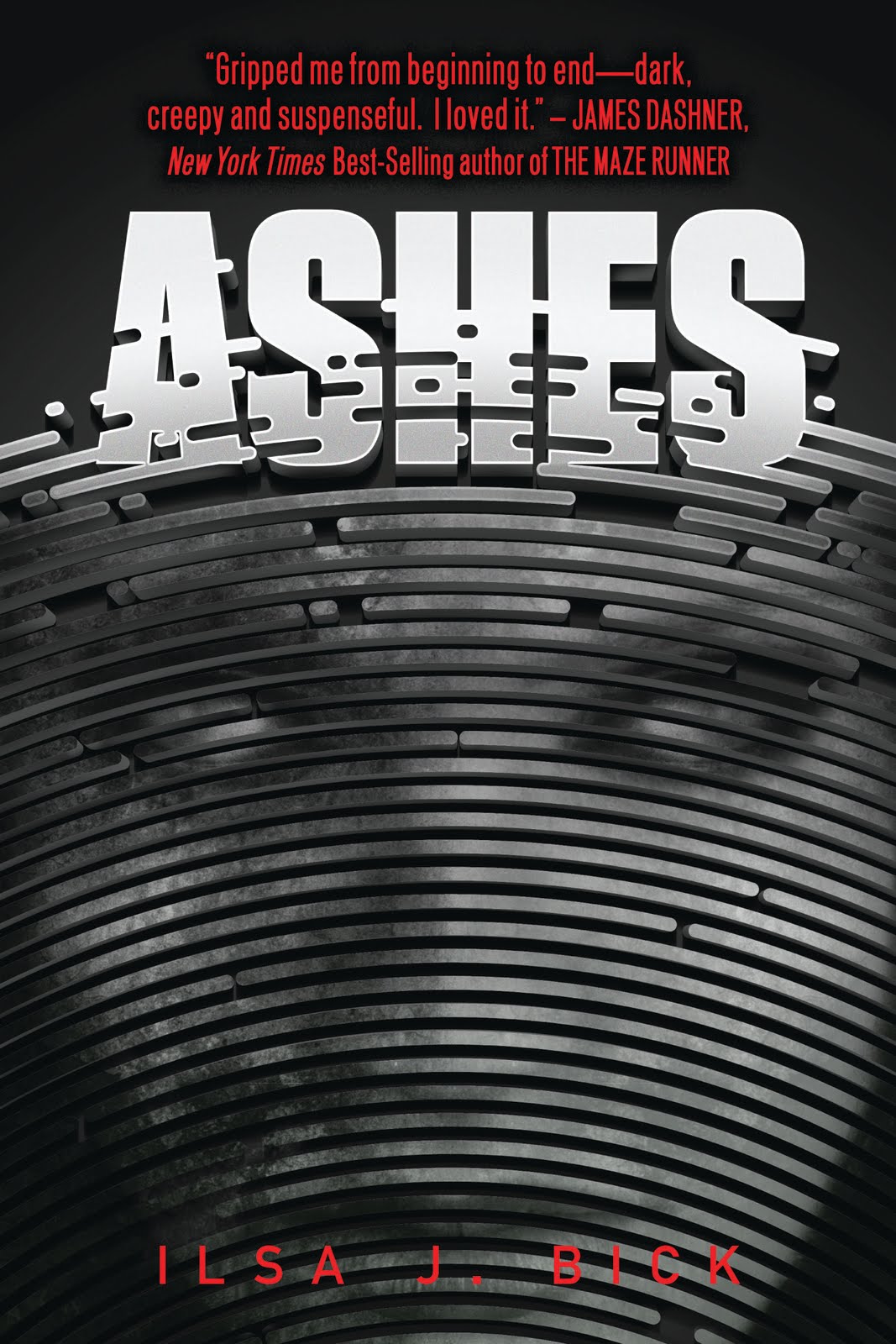
Ashes


Ashes
by Ilsa J. Bick
Grand Haven, MI: Brilliance Audio
2011
Performed by Katherine Kellgren
10 sound discs (11.3 hours)

At first I didn't know if I was going to be able to listen to this audio book or if I would have to read it myself. The narrator, Katherine Kellgren, has a very dramatic narration style that was distracting at first, with lots of loud shouting (there is a lot of shouting in this story), to lend some verisimilitude to the story's dialogue. After awhile, however, I got used to her style and became engrossed in the story.

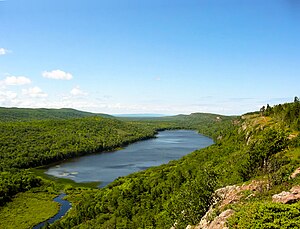
Alex has gone on a pilgrimage to the fictional Waucamaw Wilderness of the Michigan Upper Peninsula to scatter her parents' ashes from Mirror Point on Lake Superior. Besides losing her parents too soon, Alex has her own "monster" to deal with, a brain tumor in her head for which there is nothing that can be done. By visiting the wilderness that meant so much to her family, Alex hopes to find some closure and make some plans to what future she has left. It's scary for her to be alone in the wilderness, but Alex's father taught her well and she feels capable of surviving for the few weeks she will be there.

Wilderness in the Upper Peninsula of Michigan
That is, until the strange electromagnetic pulse swept the sky. Alex, who has been visiting with a grandfather and granddaughter in their campsite, is knocked to the ground and begins to bleed from her nose. Jack, the grandfather, dies immediately, probably because of his pacemaker. Ellie, the 8-year-old granddaughter, also has survived.  Being in the wilderness, Alex doesn't know the immensity of the disaster at first, but she and Ellie find out that none of their electronics work. Without Jack, Ellie is left alone, and Alex feels she should protect the little girl as best she can, but Ellie is scared and does not want to go with a stranger. Eventually they begin the hike down the mountain to the ranger station, but along the way, they encounter some of the "Changed," teens who have changed into cannibalistic violent zombie creatures and attack any living thing they can find. Some adults have survived, but only older, 65+ year olds. Besides being in the wilderness away from help, Alex and Ellie don't know how they will get home.

Eventually, Alex and Ellie meet Tom, a soldier from Afghanistan who has not changed either. The three of them, with Ellie's dog, Mina, find the ranger station and are fortunate to find food, water, and good shelter. But they can't stay there forever. They must find out what has happened and how to get help for themselves.

Most of the story is full of danger and separation. All three get separated from each other, and unfortunately, you won't find out any answers about what happens to Tom and Ellie by the end of this book. Alex is the main focus of Ashes, and we see her struggle to keep the group together, how they are parted through violence, and how Alex finds refuge in the strange town of Rule, an isolated place run by a religious "cult" who are trying to find as many unchanged, or "spared", teens as they can. Once you are allowed in to Rule, it is very difficult to leave unless the Reverend, the leader of the council, decides that you are no longer useful and then you are banished completely.

Alex also finds that along with the brain zap, she now has a super sense of smell and can smell what people are feeling and thinking. She can smell the Changed before she sees them. Another unexplained effect is the reaction of the dogs to Alex. They absolutely adore and trust her, and I think we will see Alex learn to use this to her advantage eventually.

1987 movie starring Michael Rubin,Steven McCoy, and George Seminara
With these sorts of zombie stories, I am often struck by the unexplained fact that these kids, the Changed, are able to eat other people without getting sick and dying from it. You would think that the effect of raw human blood and flesh on a digestive system unused to it would be rather disastrous, if not fatal. The author doesn't explain (yet) how the brains of these teens have been changed, we just see the results, but does it also change their other body systems? I have this problem with other zombie stories, too, so I'm not blaming Ms. Bick for failing to explain it sufficiently.

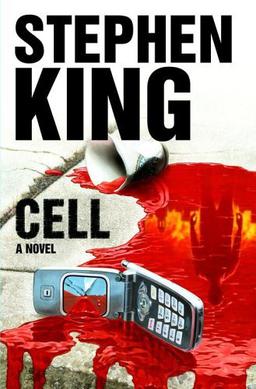
This story also reminds me of a Stephen King book, Cell, which I will review at a later time. In Cell, there is also a zap which comes through the cell phones. It turns people into mindless killing machines, too, who attack and eat each other. There is eventually more structure to those Changed, as they begin to group together and are held together through telepathy.

I recommend this story, which is Book 1 in a trilogy, to older teens, 15 and up. There is a lot of gore. The story is interesting and I am connected strongly to Alex, Tom, and Ellie, but I would rather not hear quite so many details about how the Changed rip apart their victims. And since I am left with Alex in the midst of five hungry Changed, I will have to listen to the next installment in Shadows (Book 2 in the Ashes Trilogy). I just hope I can stand all of the bloodshed!

Tuesday, September 3, 2013

Monument 14


Monument 14
by Emmy Laybourne
New York: Feiwel and Friends
2013
296 pages


Monument 14, on the YALSA Teens' Top Ten Nomination List, is a disaster book. The disaster happens in the first chapter, and two busloads of children, ages kindergarten through high school, find themselves in dire straits. This future society which offers many technological advances, including a nationwide computer network that keeps everyone informed and connected, does not hold up very long in the face of major natural disasters. Add some unnatural disasters, too, and we looking at the "end of the world as we know it."

We hear this story through Dean Grieder, a high school junior. He began his day as usual, catching the school bus, but little did he know, this day would be not be ordinary. Soon after the bus started its route to school, a hail storm unlike any other caused the bus to skid out of control and eventually turn over. Dean's younger brother was on his own bus ahead of Dean's, but that bus driver was fortunate enough to keep her bus upright, ramming it into a large superstore, Greenway. Dean's bus rolled over and kids were injured or not moving, and the bus driver was pinned under the steering wheel and appeared to be bleeding profusely. We see the that the bus is on fire, the bus driver is dying, and giant hail is pounding the bus--how will the kids get off the bus to safety?

This book takes place over the course of two weeks and the children's lives are changed dramatically. Mrs. Wooly, the brave bus driver and only adult on the premises, decided to leave to seek help at the nearby hospital and to find out what is happening. She instructed the children to remain in the store and stay together. This is the last they see her. Jake, a high school senior, is left in charge of the kids at the store, and most of the high schoolers are conscious of the needs of the small children, who are pedictably freaking out. There is a mini restaurant in the store and they are able to cook pizzas for everyone who is able to eat. Then another disaster hits--earthquake!

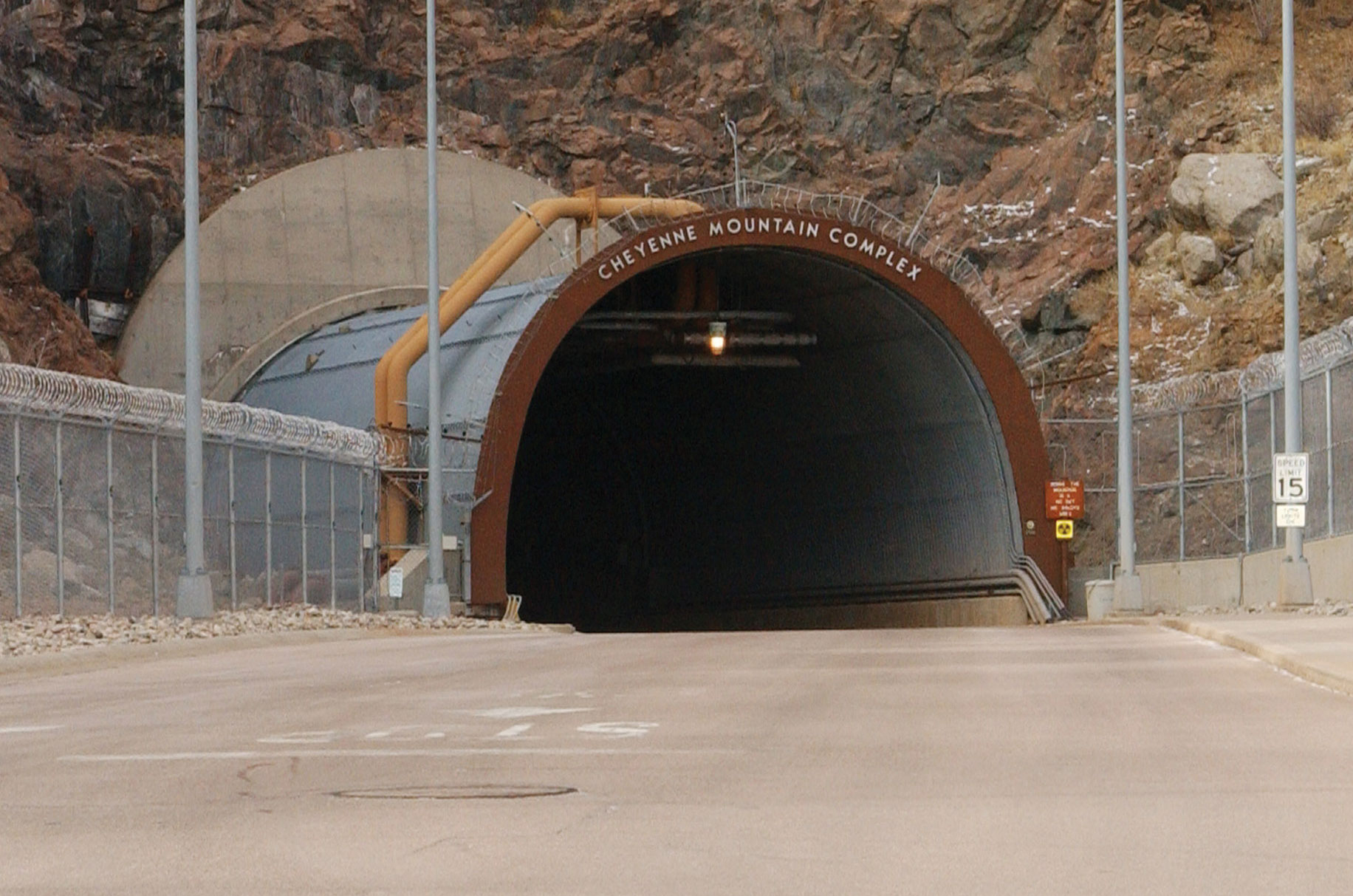
The entrance to the
 Cheyenne Mountain Complex, NORAD
One of the unnatural factors that contributes to this disaster is the chemical cloud that appears on the horizon. The North American Aerospace Defense Command (NORAD) is located near Monument and apparently they have been experimenting with dangerous chemicals. These have an immediate effect on everyone.  The news report the kids are able to get on the old television in the media section of the store reveals that the chemicals in the air affect people according to blood type:

  • Type A: severe blisters on all exposed skin. With prolonged exposure, internal organs will hemorrhage.
  • Type AB: paranoid delusions and hallucinations.
  • Type B: long-term reproductive problems, but no immediate problems.
  • Type O: dangerous, deranged, and violent behavior.

The kids realize that they need to seal up the store as well as they can, so they put up coverings over any exposed vents and doorways. Luckily the heavy metal security gates have been activated, which keeps the violent people out, but also they keep the kids from leaving.

Overall, this was an exciting story with plenty of action. I admired several of the characters and their reactions to the situation, including Dean, who takes on the cooking despite not really wanting to be tied to the kitchen; Alex, his brother, who is smart and innovative; Niko, the Boy Scout who shows his capability to deal with problems despite the dislike shown him by two of the high school boys; and Josie who, once she recovers from her shock, proves to be a welcome calming influence over the little kids.

Other characters behave in ways that I suspect would be typical of kids suddenly with no adult supervision. Brayden and Jake quickly discover the alcohol and pharmacy, choosing to get high rather than provide stable support for the smaller children. Sahalia, an 8th grade girl, becomes pouty that she isn't treated like a "big" kid, but then she doesn't contribute anything to show that she can act maturely. Her way of showing maturity is to flirt with the older boys in inappropriate ways and becoming a huge problem for the others.

One thing I did wonder about, though, was why there were no people in the superstore, Greenway. The kids were going to school before 8:00am, but the store was not open and there were no employees inside preparing for the day. If this store is similar to Walmart or Target, it would be open 24 hours, but this store is obviously not open until later in the morning. Extra people would have distracted us from the action of the story, but I doubt the realism here.

I recommend this book to all who enjoy a good end-of-the-world disaster story, but I would advise that it is more for teens 15 and older due to sexual content. Book Two Monument 14: Sky on Fire is out and I am excited to read it to find out what happens next.

Friday, August 30, 2013

Wasteland


Wasteland
by Susan Kim and Laurence Klavan
New York: HarperTeen
2013
328 pages


Wasteland is the first book of a trilogy, with two more books to come out. This is a post-apocalyptic disaster story for teens, another type of horror that attracts and repels me. The horror of living in a world that is so unlike what we know is possibly more real and scary to people than the typical horror story with ghosts and ghouls. We hear stories about horrific wars and violence in the news every day, and The End of Everything We Know is something that many people worry about. I do sometimes. We all want to know if we would be able to survive a disaster.

This story is told from the viewpoint of Esther, a 15-year-old girl who lives in the rubble of a city called Prin. In her world there are only young people, since 19 seems to be the average lifespan before kids get the disease that kills them. They do not know what it is, and there are no doctors, so there is no cure. Once someone comes down with the first symptoms, they are "shunned" and sent out into the desert wasteland alone to die. Children must grow up very quickly in this society, and partnering (the term in the book) is usually done before Esther's age of 15.

The town is governed (or rather, terrorized) by a young man named Levi who has holed himself up in a large warehouse called "The Source" on the outskirts of the main town. Levi is making Prin as much of a wasteland as any natural disaster had. He selfishly controls and guards all of the food, water, and supplies that were found in the warehouse, and Levi is the one who trades these items for work performed, or there are punishments incurred. The citizens must work beginning at age 5 and there are three main job assignments:
  1. Excavation: teams are told to dig holes around the area. They do not know why or for what purpose.
  2. Gleaning: exploring the area for anything useful, including medical supplies, bedding, fuel, etc. and taking it to the Source to be tallied up and traded for more food and water in the town's allotment.
  3. Harvesting: exploring the area to recover gasoline, the most valuable resource in Prin, from vehicles to trade to Levi for more food and water.
Needless to say, there are many dangers in this world, besides the lack of food and water. There is the intense heat of the day that continues into night. There are mutants called "variants" who are humans who have changed so much in appearance and gender identity that they really don't seem human any longer. The variants are hostile to the citizens of Prin, although the reason for that doesn't become apparent until later in the story..  But probably the biggest threat is Levi, who is not a great benefactor but a devious and possibly insane opportunist.

Esther is a rather rebellious girl who does not like to participate in the mandatory job assignments. She is constantly being reprimanded by her older sister, Sarah, but to no avail. Esther has a variant friend, as well as a friend named Jacob who lives outside of the town with his cats. She also meets Caleb, a newcomer to town who is looking for his lost son who was stolen from him. She is a free thinker who does not want things to remain the way they are and have been for a long time.

This is basically a story about good versus evil and how people, if they work together, can defeat evil to help each other. It is a story of survival. We are not told what has happened to the world, which is perhaps one of the flaws of the story, but we assume it is a nuclear war and that the sickness and mutations must be caused by radiation poisoning. I do not have the feeling that the disaster was recent, either, so the present generation of the story have evolved and changed and adapted somewhat. But I also suspect it couldn't have happened too long ago, since there are still valuables to find in the surrounding area. We also don't learn about any other communities of "normal" people. Is the entire country like this, a barren wasteland run by children?

There have been other stories about kids surviving on their own and what we imagine it would be like. Lord of the Flies comes immediately to mind, and there is no happy ending to that tale. Wasteland, however, does have a happy ending: Esther resolves her issues and gains acceptance by her community, Levi is destroyed, and the town finds something they need desperately to survive which gives them hope for the future.

Although I have read better dystopian books, this one has some interesting plot lines. It has a strong female character, a romance, and satisfying resolution to a main problem. Teens who are interested in dystopian fiction will probably want to try this series, but due to the more graphic sexual discussions in the book, I would recommend to older teens, perhaps 15 and older.